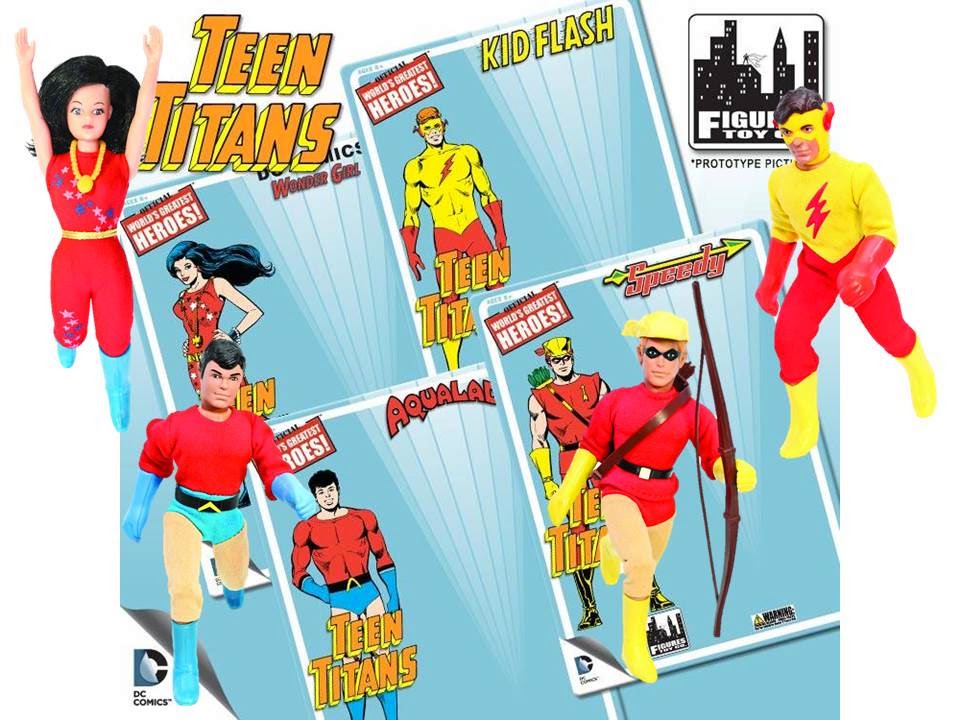
Well, Marvel Infinite Series 4 has been around before.
Platinum Hulk was part of Marvel Avengers Series 1, Death's Head was part of Marvel Avengers Series 2, and Rocket Raccoon (with Groot), Starlord and Drax were all in the Guardians of the Galaxy 3-pack at Toys R Us!
Still, ionic Wonder Man is new (more or less, as a normal version of him came out with Quicksilver in a 2-pack a while back....). At least Hasbro is making figures!
A blog about comic books, and enjoying the stories, characters and creators of them...and occasionally subjects that relate to comic books as well.
Monday, July 21, 2014
Thursday, July 17, 2014
Paranoia, the Destroyer of Thor
With thanks to Ray Davies of the Kinks, who gave us the song,
Destroyer in 1979, Thor had faced his own Destroyer before that.
The Destroyer was also in the Thor movie that came out on May 6th, 2011. You can have no fear, as you’ll get a little of the comic history of the Destroyer, created by Stan Lee and Jack Kirby right here!
Thor first faced the armored Asgardian construct known as the Destroyer in Journey Into Mystery #118 (July 1965). The Destroyer is a suit of armor made of uru metal with no will of its own, so it has to have a life force inhabiting it to act.
The suit was created by Odin (the All-Father of the Asgardians, and father to Thor), which does seem like a strange thing, doesn’t it?
The animated Asgardian armor was found in the Temple of Darkness by a hunter, Buck Franklin, who Loki (Thor’s evil magic using step-brother) had manipulated into finding the armor, and then set him against Thor.
Thor tricked the hunter into vacating the armor, and Odin buried the lifeless beneath a mountain of rubble that had been the Temple of Darkness.
This should have been the end of the Destroyer....
....well, it wasn't!
The armor returns briefly, thanks to being possessed by the spirit of Loki in Thor Annual #2 (September, 1966).
Odin stops Loki’s evil plan to hurt Thor and his friends, the Warriors Three (Fandral the Dashing, Hogun the Grim and Volstagg…well, the round; these three, like the Destroyer, were additions to the comic mythology that were not a part of Norse mythology) and the All-Father banished the armor.
Karnilla, the Norn Queen, then retrieved the Destroyer, and Sif (a female Asgardian goddess of the hunt who has a thing for Thor) animated the suit and used it to help a weakened Thor battle his nemesis, the Wrecker (Dirk Garthwaite, a worker in a demolition crew who got strength and stamina from a crowbar enchanted by Karnilla and with this power thought he was Mr. Big Man).
Sif’s plan to help doesn’t go so well after she defeats the Wrecker while in the Destroyer armor, as Thor ends up attacking the Destroyer.
Still, this all gets resolved and Odin takes the armor away (and this all happens in Thor #150-152 in 1968, still under the sway of Lee and Kirby).
The Destroyer went away for a while, but came back in force!
Thor next encounters the Destroyer with his friend, and fellow Avenger, Hercules (the son of Zeus, and an Olympian demi-god) starting with Thor #224 (written by Gerry Conway, who also teamed Hercules with Thor in the television medium, when the show, Hercules: The Legendary Journeys, was on the air, in the episodes “Norse by Norsevest” and “Somewhere Over the Rainbow Bridge” and art by John Buscema).
The Destroyer armor was animated this time by Professor Clement Holmes, who found the armor in South America. The Destroyer fights Hercules and Thor, and they get the Professor’s soul out of the armor. Thor and Hercules then end up meeting Firelord (Pyreus Kril, a herald of Galactus), and, after an adventure with Galactus’ herald that convinces them that Firelord wants to be free of Galactus, offer up the Destroyer to be Galactus’ new herald to allow Firelord his freedom. No one seems to be concerned with the Destroyer’s freedom, but then again, it’s basically just a suit!
The Destroyer, now animated by a part of Galactus’ life-force, finds High Evolutionary’s Counter-Earth (an Earth duplicate complete with on the opposite side of the Sol system).
Galactus (Galan, a primal force in the universe that desires maximum consumption) must feed, but the Fantastic Four distract him and convince him to look for a new world to feast upon (and, during this, the Thing faces the Destroyer, with Ben Grimm aka the Thing not his usual rocky self, but instead just a man in a Thing exoskeleton armor!
This all happens from Fantastic Four #172-174, written by Roy Thomas and art by George Perez for #172 and John Buscema for #173-174 and covers by Jack Kirby).
Loki uses this opportunity of distraction to take the Destroyer, trick Balder (Thor’s Asgardian friend) into animating the suit, then getting Balder OUT of the armor when the Destroyer tries to kill Loki instead!
Thor briefly inhabits the Destroyer armor at this time, but Odin forces him out and keeps the armor in Asgard (and it all happens in Thor #264-266, by Len Wein and Walt Simonson in 1977).
In an incredible epic by Roy Thomas, we learn the truth behind the Destroyer (after all, it seems the armor has only caused pain and suffering to Thor and his friends and allies…so, why DID Odin create it?).
A time later, when Thor was at odds with Odin (when isn’t he?), Sif inhabits the Destroyer to enforce Odin’s exile of Thor and sends Thor to Earth from Asgard.
In Thor #300 (with art by Keith Pollard, in October, 1980), we learn that Odin created the Destroyer to host the souls of all the Asgardians in Asgard to allow them to battle the Celestials (space gods created by Jack Kirby, who stood in judgment of humanity for eons, and the judgment was coming soon; well soon in god terms).
Odin had enlisted help from other Earth pantheons (like the Olympian Zeus) to power the Destroyer armor.
Sadly, the Destroyer did not fare well against the Celestials (even grown to giant size and wielding the Odinsword), being melted into slag.
(Thor and others stopped the Celestials from destroying Earth and restored the Asgardians, by the way).
And, the rest of the story on the Destroyer will follow next week (after all, just because you’ve been melted down doesn’t end your existence, right?).
The Destroyer was also in the Thor movie that came out on May 6th, 2011. You can have no fear, as you’ll get a little of the comic history of the Destroyer, created by Stan Lee and Jack Kirby right here!
Thor first faced the armored Asgardian construct known as the Destroyer in Journey Into Mystery #118 (July 1965). The Destroyer is a suit of armor made of uru metal with no will of its own, so it has to have a life force inhabiting it to act.
The suit was created by Odin (the All-Father of the Asgardians, and father to Thor), which does seem like a strange thing, doesn’t it?
The animated Asgardian armor was found in the Temple of Darkness by a hunter, Buck Franklin, who Loki (Thor’s evil magic using step-brother) had manipulated into finding the armor, and then set him against Thor.
Thor tricked the hunter into vacating the armor, and Odin buried the lifeless beneath a mountain of rubble that had been the Temple of Darkness.
This should have been the end of the Destroyer....
....well, it wasn't!
The Return of the Destroyer
The armor returns briefly, thanks to being possessed by the spirit of Loki in Thor Annual #2 (September, 1966).
Odin stops Loki’s evil plan to hurt Thor and his friends, the Warriors Three (Fandral the Dashing, Hogun the Grim and Volstagg…well, the round; these three, like the Destroyer, were additions to the comic mythology that were not a part of Norse mythology) and the All-Father banished the armor.
Karnilla, the Norn Queen, then retrieved the Destroyer, and Sif (a female Asgardian goddess of the hunt who has a thing for Thor) animated the suit and used it to help a weakened Thor battle his nemesis, the Wrecker (Dirk Garthwaite, a worker in a demolition crew who got strength and stamina from a crowbar enchanted by Karnilla and with this power thought he was Mr. Big Man).
Sif’s plan to help doesn’t go so well after she defeats the Wrecker while in the Destroyer armor, as Thor ends up attacking the Destroyer.
Still, this all gets resolved and Odin takes the armor away (and this all happens in Thor #150-152 in 1968, still under the sway of Lee and Kirby).
The Destroyer went away for a while, but came back in force!
More Destroyer With Hercules
Thor next encounters the Destroyer with his friend, and fellow Avenger, Hercules (the son of Zeus, and an Olympian demi-god) starting with Thor #224 (written by Gerry Conway, who also teamed Hercules with Thor in the television medium, when the show, Hercules: The Legendary Journeys, was on the air, in the episodes “Norse by Norsevest” and “Somewhere Over the Rainbow Bridge” and art by John Buscema).
The Destroyer armor was animated this time by Professor Clement Holmes, who found the armor in South America. The Destroyer fights Hercules and Thor, and they get the Professor’s soul out of the armor. Thor and Hercules then end up meeting Firelord (Pyreus Kril, a herald of Galactus), and, after an adventure with Galactus’ herald that convinces them that Firelord wants to be free of Galactus, offer up the Destroyer to be Galactus’ new herald to allow Firelord his freedom. No one seems to be concerned with the Destroyer’s freedom, but then again, it’s basically just a suit!
Herald the Destroyer
The Destroyer, now animated by a part of Galactus’ life-force, finds High Evolutionary’s Counter-Earth (an Earth duplicate complete with on the opposite side of the Sol system).
Galactus (Galan, a primal force in the universe that desires maximum consumption) must feed, but the Fantastic Four distract him and convince him to look for a new world to feast upon (and, during this, the Thing faces the Destroyer, with Ben Grimm aka the Thing not his usual rocky self, but instead just a man in a Thing exoskeleton armor!
This all happens from Fantastic Four #172-174, written by Roy Thomas and art by George Perez for #172 and John Buscema for #173-174 and covers by Jack Kirby).
Loki Again
Loki uses this opportunity of distraction to take the Destroyer, trick Balder (Thor’s Asgardian friend) into animating the suit, then getting Balder OUT of the armor when the Destroyer tries to kill Loki instead!
Thor briefly inhabits the Destroyer armor at this time, but Odin forces him out and keeps the armor in Asgard (and it all happens in Thor #264-266, by Len Wein and Walt Simonson in 1977).
The Epic of the Destroyer
In an incredible epic by Roy Thomas, we learn the truth behind the Destroyer (after all, it seems the armor has only caused pain and suffering to Thor and his friends and allies…so, why DID Odin create it?).
A time later, when Thor was at odds with Odin (when isn’t he?), Sif inhabits the Destroyer to enforce Odin’s exile of Thor and sends Thor to Earth from Asgard.
In Thor #300 (with art by Keith Pollard, in October, 1980), we learn that Odin created the Destroyer to host the souls of all the Asgardians in Asgard to allow them to battle the Celestials (space gods created by Jack Kirby, who stood in judgment of humanity for eons, and the judgment was coming soon; well soon in god terms).
Odin had enlisted help from other Earth pantheons (like the Olympian Zeus) to power the Destroyer armor.
Sadly, the Destroyer did not fare well against the Celestials (even grown to giant size and wielding the Odinsword), being melted into slag.
(Thor and others stopped the Celestials from destroying Earth and restored the Asgardians, by the way).
And, the rest of the story on the Destroyer will follow next week (after all, just because you’ve been melted down doesn’t end your existence, right?).
Wednesday, July 16, 2014
Batman Goes Ape
Well, for truth in advertising, it isn't Batman who goes ape in Batman #114 (March, 1958 with art by Sheldon Moldoff, but no listed writer....though Bill Finger is given a credit), instead it is a circus gorilla named Mogo.
Mogo's owner, Arthur Harris, gets blamed for a theft after Mogo creates a distraction at the circus...
...but Harris wasn't responsible!
Batman and Robin go to clear Harris' name and Mogo tags along.
Mogo helps, and ends up in the Batcave, where he takes one of Batman's spare cape and cowl's (much against Alfred's wishes) and follows the dynamic duo...and helps capture the criminals!
As Harris is cleared, he takes Mogo back to Africa and sets him free (and later appears on an episode of the animated Batman: Brave & the Bold series).
Sounds almost like an episode of the 1960s Batman TV show produced by 20th Century Fox...no?
Well, a few of the Planet of the Apes (also made by 20th Century Fox) stars were on the Batman TV show!
Maurice Evans played the Puzzler (a Riddler-knock off when Frank Gorshin wasn't available) in two episodes of Batman, ("The Duo Is Slumming" and "The Puzzles Are Coming") in Season 2 in December, 1966...and was Dr. Zaius in Planet of the Apes (1968) and Beneath the Planet of the Apes (1970).
Linda Harrison made it into a pair of Batman episodes as a cheerleader at Dick Grayson's school in 1966 with "He Meets His Match, the Grisly Ghoul" and "The Joker Goes To School"...and was Nova in Planet of the Apes (1968) and Beneath the Planet of the Apes (1970), and even made a brief cameo in the Planet of the Apes (2001) as a woman in the cart!
Don't blink or you'll miss her in the 2001 Planet of the Apes....or in the Batman episodes!
Victor Buono was the Egyptian master of menace, King Tut, in 10 original Batman episodes, "The Curse of Tut", "The Pharaoh's In A Rut", "The Spell of Tut", "Tut's Case Is Shut", "King Tut's Coup", Batman's Waterloo", "A Horse of Another Color", "The Unkindest Tut of All", "The Great Train Robbery" and "I'll Be A Mummy's Uncle"...and played the mutant Fat Man in Beneath the Planet of the Apes (1970).
"Fat Man" was a reference to the bomb, as the mutants worshiped the atomic bomb...and maybe to his other qualities as well.
H.M. Wynant was Frosty in two Batman episodes ("Ice Spy" and "The Duo Defy") in 1967 with Eli Wallach's Mr. Freeze, and was Inspector Hoskyns (the henchman of Chief Inspector Kolp, who interrogated poor Armando) in Conquest of the Planet of the Apes (1972).
Wynant is likely best remembered from his time in the Twilight Zone, in the episode "The Howling Man" from 1960!
Last, but certainly not least, Roddy McDowall was the Bookworm in two episodes of Batman in 1966, "The Bookworm Turns" and "While Gotham City Burns"...a villain obsessed with books and reading...and was the scientist chimp Cornelius in Planet of the Apes (1968) and Escape From the Planet of the Apes (1971), then playing Cornelius' son, Caesar, in Conquest of the Planet of the Apes (1972) and Battle For the Planet of the Apes (1973), and even returning to the TV show, Planet of the Apes, for its one and only 1974 season as Galen, the chimp confidant of the two human astronauts and to the Batman world in the Batman: Animated Series in 1992-1994 as the voice of the Mad Hatter!
Holy ape connection, Batman!
Mogo's owner, Arthur Harris, gets blamed for a theft after Mogo creates a distraction at the circus...
...but Harris wasn't responsible!
Batman and Robin go to clear Harris' name and Mogo tags along.
Mogo helps, and ends up in the Batcave, where he takes one of Batman's spare cape and cowl's (much against Alfred's wishes) and follows the dynamic duo...and helps capture the criminals!
As Harris is cleared, he takes Mogo back to Africa and sets him free (and later appears on an episode of the animated Batman: Brave & the Bold series).
Sounds almost like an episode of the 1960s Batman TV show produced by 20th Century Fox...no?
Planet of the Apes on Batman
Well, a few of the Planet of the Apes (also made by 20th Century Fox) stars were on the Batman TV show!
Maurice Evans played the Puzzler (a Riddler-knock off when Frank Gorshin wasn't available) in two episodes of Batman, ("The Duo Is Slumming" and "The Puzzles Are Coming") in Season 2 in December, 1966...and was Dr. Zaius in Planet of the Apes (1968) and Beneath the Planet of the Apes (1970).
Linda Harrison made it into a pair of Batman episodes as a cheerleader at Dick Grayson's school in 1966 with "He Meets His Match, the Grisly Ghoul" and "The Joker Goes To School"...and was Nova in Planet of the Apes (1968) and Beneath the Planet of the Apes (1970), and even made a brief cameo in the Planet of the Apes (2001) as a woman in the cart!
Don't blink or you'll miss her in the 2001 Planet of the Apes....or in the Batman episodes!
Victor Buono was the Egyptian master of menace, King Tut, in 10 original Batman episodes, "The Curse of Tut", "The Pharaoh's In A Rut", "The Spell of Tut", "Tut's Case Is Shut", "King Tut's Coup", Batman's Waterloo", "A Horse of Another Color", "The Unkindest Tut of All", "The Great Train Robbery" and "I'll Be A Mummy's Uncle"...and played the mutant Fat Man in Beneath the Planet of the Apes (1970).
"Fat Man" was a reference to the bomb, as the mutants worshiped the atomic bomb...and maybe to his other qualities as well.
H.M. Wynant was Frosty in two Batman episodes ("Ice Spy" and "The Duo Defy") in 1967 with Eli Wallach's Mr. Freeze, and was Inspector Hoskyns (the henchman of Chief Inspector Kolp, who interrogated poor Armando) in Conquest of the Planet of the Apes (1972).
Wynant is likely best remembered from his time in the Twilight Zone, in the episode "The Howling Man" from 1960!
Last, but certainly not least, Roddy McDowall was the Bookworm in two episodes of Batman in 1966, "The Bookworm Turns" and "While Gotham City Burns"...a villain obsessed with books and reading...and was the scientist chimp Cornelius in Planet of the Apes (1968) and Escape From the Planet of the Apes (1971), then playing Cornelius' son, Caesar, in Conquest of the Planet of the Apes (1972) and Battle For the Planet of the Apes (1973), and even returning to the TV show, Planet of the Apes, for its one and only 1974 season as Galen, the chimp confidant of the two human astronauts and to the Batman world in the Batman: Animated Series in 1992-1994 as the voice of the Mad Hatter!
Holy ape connection, Batman!
Tuesday, July 15, 2014
Baseball's Silver Age
No, not talking about Babe Ruth, Ty Cobb, Lou Gehrig, Al Kaline, Pete Rose, Kirk
Gibson, Reggie Jackson, or even A-Rod, but instead, a little bit on how
comic books used some of their tried and true storylines with baseball
players instead of super-heroes!
A great way to kick off the All-Star game and get a little of some the stranger parts of the Silver Age, where anything could happen….and often did!
First up, a story from Brave & the Bold #45 (January 1963), wherein the baseball uniforms were animated to battle against a team of regular players in “The Challenge of the Headless Baseball Team” in a cover by Carmine Infantino and Murphy Anderson (and interior story written by Gardner Fox, with art by Infantino...).
This kicked off a run of Strange Sports Stories...and boy were these sports stories strange!
This theme of either the hero becoming a bodiless uniform, or fighting a bodiless uniform was used a few times, once in Action Comics #383-384 (Dec-Jan 1969, 1970) with Superman (and a little later in issue #299 of his own title when one of Superman‘s foes made him only his uniform!), Green Lantern foe - the Invisible Destroyer from Showcase #23 (November-December, 1959), a little bit in Flash (there was slight of hand involved with Abra Kadabra in his first appearance in #128 in May, 1962), and later on wherein the Justice League of America (in #35, May 1965) where the team faced off against the animated uniforms of a few of their fiercest foes like Pied Piper, Killer Moth and Dr. Polaris in the “Battle of the Bodiless Uniforms”!
Then, another Strange Sports Story happened in Brave & the Bold #49 (September 1963, with another cover by Carmine Infantino and Murphy Anderson), wherein the baseball team faced off against simians, monkeying around on the infield in the “Gorilla Wonders of the Diamond!”, written by Gardner Fox!
This was also the last of the strange sports stories for Brave and the Bold, as they switched to super-hero team-ups with the next issue (starring Green Arrow and the Manhunter from Mars to start!)
For those that don’t know, back in the Silver Age, it had been “proven” that putting an ape on a cover would increase sales of comics. Superman had Titano (a monkey enlarged to King Kong size, with Kryptonite vision, first appearance Superman #127, February 1959), Flash had Gorilla Grodd (a super-intelligent beast with mental powers who first faced the speedster in Flash #106, April-May 1959, but he didn't make a cover until Flash #127), the Doom Patrol had Monseiur Mallah (an experiment and more with the Brain of the Brotherhood of Evil starting with Doom Patrol #86, March 1964), Congo Bill added Congorilla (a golden ape whom the great white hunter switched minds with thanks to a mystic ring) in Action Comics #248, January 1959, and even Rex the Wonder Dog had the Detective Chimp (a monkey who solved crimes starting with Rex, the Wonder Dog #4, July-August 1952)!
The simian fascination in comics is explained a little more in Secret Origins #40, featuring 3 of these characters (but still missing a few, like the Gorilla Boss of Gotham City (first appeared Batman #75, February-March 1953), the Mod Gorilla Boss foe of Animal Man from Strange Adventures #201, June 1967, Mogo the Bat-Ape from Batman #114, March 1958, even Sam Simeon of Angel & the Ape who started in Showcase #77, September 1968).
So, not only did your favorite costumed heroes fight some odd things back in the day, but so did the boys of summer! Baseball sure was interesting back then.
You have to wonder who would have won, the empty uniforms or the gorillas?
Grodd thinks he has the answer....
A great way to kick off the All-Star game and get a little of some the stranger parts of the Silver Age, where anything could happen….and often did!
Baseball Uniforms
First up, a story from Brave & the Bold #45 (January 1963), wherein the baseball uniforms were animated to battle against a team of regular players in “The Challenge of the Headless Baseball Team” in a cover by Carmine Infantino and Murphy Anderson (and interior story written by Gardner Fox, with art by Infantino...).
This kicked off a run of Strange Sports Stories...and boy were these sports stories strange!
Monkeying Around On The Field
Then, another Strange Sports Story happened in Brave & the Bold #49 (September 1963, with another cover by Carmine Infantino and Murphy Anderson), wherein the baseball team faced off against simians, monkeying around on the infield in the “Gorilla Wonders of the Diamond!”, written by Gardner Fox!
This was also the last of the strange sports stories for Brave and the Bold, as they switched to super-hero team-ups with the next issue (starring Green Arrow and the Manhunter from Mars to start!)
For those that don’t know, back in the Silver Age, it had been “proven” that putting an ape on a cover would increase sales of comics. Superman had Titano (a monkey enlarged to King Kong size, with Kryptonite vision, first appearance Superman #127, February 1959), Flash had Gorilla Grodd (a super-intelligent beast with mental powers who first faced the speedster in Flash #106, April-May 1959, but he didn't make a cover until Flash #127), the Doom Patrol had Monseiur Mallah (an experiment and more with the Brain of the Brotherhood of Evil starting with Doom Patrol #86, March 1964), Congo Bill added Congorilla (a golden ape whom the great white hunter switched minds with thanks to a mystic ring) in Action Comics #248, January 1959, and even Rex the Wonder Dog had the Detective Chimp (a monkey who solved crimes starting with Rex, the Wonder Dog #4, July-August 1952)!
So, not only did your favorite costumed heroes fight some odd things back in the day, but so did the boys of summer! Baseball sure was interesting back then.
You have to wonder who would have won, the empty uniforms or the gorillas?
Grodd thinks he has the answer....
Monday, July 14, 2014
Teen Titans Retro Action Figures Series 1
It's the fab four...well, almost!
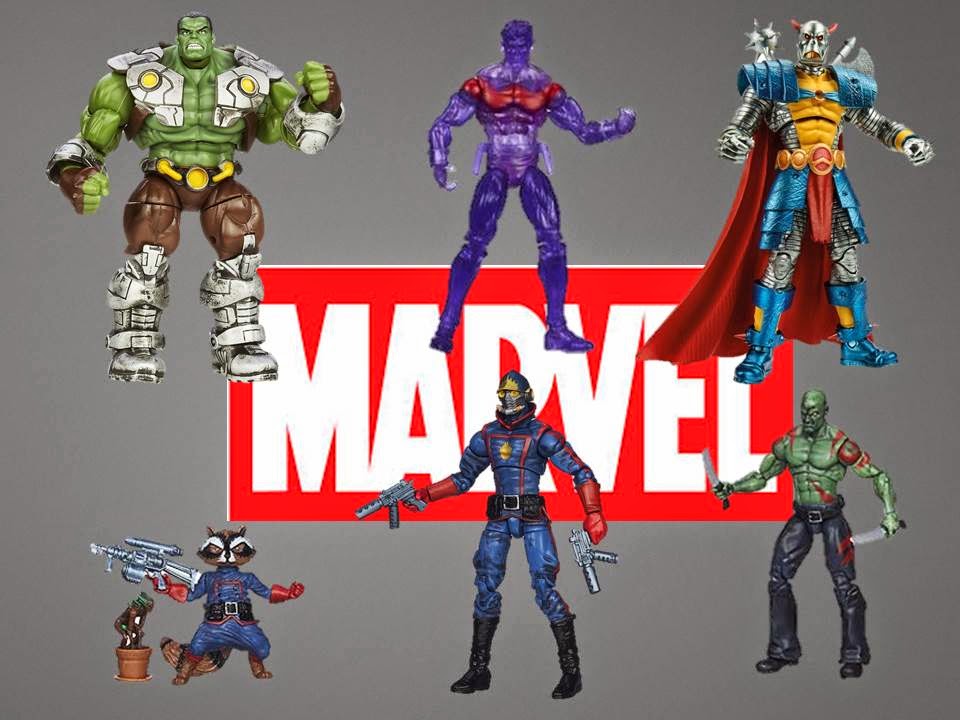
These action figures are exact reproductions of the original ones that were produced by Mego. Series one will include Wonder Girl, Aqualad, Kid Flash & Speedy. Available in 7 inch only (as they were made slightly shorter than the regular 8 inch Mego figures, including, sadly, Robin, so he'll be a little larger than his friends!).
Teen Titans Retro Figures Series 1
These action figures are exact reproductions of the original ones that were produced by Mego. Series one will include Wonder Girl, Aqualad, Kid Flash & Speedy. Available in 7 inch only (as they were made slightly shorter than the regular 8 inch Mego figures, including, sadly, Robin, so he'll be a little larger than his friends!).
Thursday, July 10, 2014
Teen Titans Together…Almost
Or, this isn’t your Junior Justice League (or even Young Justice!).
Back in the early days of comics (the 1940s), heroes were given proteges to enhance the reader experience. Child labor laws were a little easier back then, so having a brightly garbed kid next to you to take bullets for you was not really frowned on. And, these youngsters fought crime with an older hero, giving the kid reading the stories someone to identify with.
At DC Comics, Batman had Robin, Green Arrow had Speedy, Sandman had Sandy, Stripsey had the Star-Spangled Kid, and so forth. Kids even gathered to fight crime (or the war) with the Newsboy Legion and the Boy Commandos (they weren’t super-heroes, though the Newsboys worked with the Guardian, an adult who was). The Newsboy Legion, Boy Commandos and Sandy even teamed-up in Detective Comics #76 (June 1943, by Jack Kirby and Joe Simon) to fight Nazis (along with Sandman and the Guardian).
Star-Spangled Kid and Speedy were both members of the Seven Soldiers of Victory in Leading Comics for 14 issues along with their mentors (Stripsey and Green Arrow), and a few other heroes like the Crimson Avenger, Shining Knight and Vigilante.
Sadly, there was never a real gathering of the sidekicks of the Justice Society of America (even though there was a Junior Justice Society made of fans!).
But, the various sidekicks didn’t work together without their mentors until Brave & the Bold #54 (June-July 1964) by Bob Haney and Bruno Premiani, but this set the stage for so much more!
This is NOT an appearance of the Teen Titans, but just the three kids (Robin, Kid Flash and Aqualad – three of the five charter Teen Titans, and well, the other two being Speedy and Wonder Girl, if you didn’t know) first working together to stop the menace of Mr. Twister in Hatton Corners. (Remember Brom Stikk aka Mr. Twister…he does indeed pop up later!) These kids first meet and stop the menace to the small town…all without the help of their famous partners.
But, before getting ahead of ourselves, let’s meet the future Titans!
One of the very earliest of the sidekicks was Robin, The Boy Wonder. He first appeared in Detective Comics #38 (April, 1940, by Bill Finger and Bob Kane, though the first appearance of the Earth-1 Robin would be Superman #76 in May-June 1952, and he’s the one who would be a Titan...it was the earlier Robin who had solo adventures in Star-Spangled Comics!).
Dick Grayson first became the Robin, the Boy Wonder, back in the day, as he was a member of the circus act, the Flying Graysons, along with his parents, at Haly’s Circus. When the circus came to Gotham, the owner ran afoul of a mobster by the name of Boss Zucco, who had John and Mary Grayson killed during their high-wire act. The boy, young Richard, survived, but Bruce Wayne (aka Batman) took him in for the lad’s safety (though how safe he was fighting crime…is something that can be debated!). Still, Batman had the boy’s best interest at heart, and worked to keep him safe, even while fighting crime, and with the help of Alfred Pennyworth, raised him to eventually strike out on his own and help others as well with his detective skills. And, as Batman joined the Justice League of America, it became time for Robin to find some young super-powered friends as well!
Kid Flash started as Wally West, who was just the nephew from Blue Valley to Iris West of Central City, and a fan of the heroic doings of the new hero, the Flash. Then, with Flash #110 (December-January 1959, by John Broome and Carmine Infantino), things changed as Iris brought the boy to her home to meet…police scientist Barry Allen. Wally was not impressed, but that changed in a hurry. Barry was able to introduce the lad to his “friend” (really, Barry’s own alter-ego, of which Iris was unaware of at the time) the Flash!
Meeting the Flash changed young Wally’s life…as the lab accident
that happened to Barry was repeated with the lad, and he too gained
super-speed.
At first, taking the name of Kid Flash, Wally wore a costume similar to his idol (but smaller), until it was changed into the look better know with Flash #135 (March, 1963, also by Broome and Infantino)…pretty much the way it happened on the cover. Establishing his independence from his mentor was the first step this speedy lad needed to prepare himself for joining a group as his mentor did when he co-founded the Justice League!
Aqualad started small in Adventure Comics #269 (February 1960 by Robert Bernstein and Ramona Fradon) but quickly grew in importance! Found by Aquaman, young Garth was just “The Kid From Atlantis!”…but he really was so much more. The future Aqualad had been taken to land because he had purple eyes (a trait that suggested there was something wrong with the boy) as well as a fear of fish (quite the problem for an undersea dweller!). Aquaman, himself no stranger to being exiled from Atlantis (he, because of his blond hair), helped the boy to overcome his fears by working with him (as well as Aquaman’s own pet octopus, Topo).
The two then wandered the seas, fighting crime and looking for a place to belong….which Aquaman found, when he returned to Atlantis as its king (bringing the orphaned Aqualad with him), and as a co-founder of the Justice League, Aquaman had a group of friends besides the boy (as well as his new girlfriend, Mera)…so, it’s time for Garth to meet up with others as well.
This all happened with Brave and the Bold #54….but, even after defeating Mr. Twister, the youngsters didn’t form the Teen Titans. Their next appearance en masse (and the first appearance of the Teen Titans) was in Brave and the Bold #60 (June-July 1965, also by Bob Haney and Bruno Premiani), and it also included Wonder Girl (who was making her first appearance here as well, as a younger partner of Wonder Woman that Diana and her mother, Hippolyta, allowed to leave Paradise Island and join the boys in this adventure)….as the already formed team was facing the menace of the Separated Man in the town of Midville!
How groovy is that? (Hey, it was the nineteen sixties…people were much more down with that hip lingo…or least, so writers thought. Still, it gave the series a unique flavor…).
But, who was Wonder Girl? And, weren’t there other heroes around with sidekicks that could have been members? And what of the young hero, Superboy?
Well, those answers came later, and, thus, we’ll take a break here and bring you those answers sometime in the future as well!
Back in the early days of comics (the 1940s), heroes were given proteges to enhance the reader experience. Child labor laws were a little easier back then, so having a brightly garbed kid next to you to take bullets for you was not really frowned on. And, these youngsters fought crime with an older hero, giving the kid reading the stories someone to identify with.
At DC Comics, Batman had Robin, Green Arrow had Speedy, Sandman had Sandy, Stripsey had the Star-Spangled Kid, and so forth. Kids even gathered to fight crime (or the war) with the Newsboy Legion and the Boy Commandos (they weren’t super-heroes, though the Newsboys worked with the Guardian, an adult who was). The Newsboy Legion, Boy Commandos and Sandy even teamed-up in Detective Comics #76 (June 1943, by Jack Kirby and Joe Simon) to fight Nazis (along with Sandman and the Guardian).
Star-Spangled Kid and Speedy were both members of the Seven Soldiers of Victory in Leading Comics for 14 issues along with their mentors (Stripsey and Green Arrow), and a few other heroes like the Crimson Avenger, Shining Knight and Vigilante.
Sadly, there was never a real gathering of the sidekicks of the Justice Society of America (even though there was a Junior Justice Society made of fans!).
But, the various sidekicks didn’t work together without their mentors until Brave & the Bold #54 (June-July 1964) by Bob Haney and Bruno Premiani, but this set the stage for so much more!
This is NOT an appearance of the Teen Titans, but just the three kids (Robin, Kid Flash and Aqualad – three of the five charter Teen Titans, and well, the other two being Speedy and Wonder Girl, if you didn’t know) first working together to stop the menace of Mr. Twister in Hatton Corners. (Remember Brom Stikk aka Mr. Twister…he does indeed pop up later!) These kids first meet and stop the menace to the small town…all without the help of their famous partners.
But, before getting ahead of ourselves, let’s meet the future Titans!
The Boy Wonder
One of the very earliest of the sidekicks was Robin, The Boy Wonder. He first appeared in Detective Comics #38 (April, 1940, by Bill Finger and Bob Kane, though the first appearance of the Earth-1 Robin would be Superman #76 in May-June 1952, and he’s the one who would be a Titan...it was the earlier Robin who had solo adventures in Star-Spangled Comics!).
Dick Grayson first became the Robin, the Boy Wonder, back in the day, as he was a member of the circus act, the Flying Graysons, along with his parents, at Haly’s Circus. When the circus came to Gotham, the owner ran afoul of a mobster by the name of Boss Zucco, who had John and Mary Grayson killed during their high-wire act. The boy, young Richard, survived, but Bruce Wayne (aka Batman) took him in for the lad’s safety (though how safe he was fighting crime…is something that can be debated!). Still, Batman had the boy’s best interest at heart, and worked to keep him safe, even while fighting crime, and with the help of Alfred Pennyworth, raised him to eventually strike out on his own and help others as well with his detective skills. And, as Batman joined the Justice League of America, it became time for Robin to find some young super-powered friends as well!
The Fastest Kid Alive!
Kid Flash started as Wally West, who was just the nephew from Blue Valley to Iris West of Central City, and a fan of the heroic doings of the new hero, the Flash. Then, with Flash #110 (December-January 1959, by John Broome and Carmine Infantino), things changed as Iris brought the boy to her home to meet…police scientist Barry Allen. Wally was not impressed, but that changed in a hurry. Barry was able to introduce the lad to his “friend” (really, Barry’s own alter-ego, of which Iris was unaware of at the time) the Flash!
Meeting the Flash changed young Wally’s life…as the lab accident
that happened to Barry was repeated with the lad, and he too gained
super-speed.At first, taking the name of Kid Flash, Wally wore a costume similar to his idol (but smaller), until it was changed into the look better know with Flash #135 (March, 1963, also by Broome and Infantino)…pretty much the way it happened on the cover. Establishing his independence from his mentor was the first step this speedy lad needed to prepare himself for joining a group as his mentor did when he co-founded the Justice League!
Prince of the Seas
Aqualad started small in Adventure Comics #269 (February 1960 by Robert Bernstein and Ramona Fradon) but quickly grew in importance! Found by Aquaman, young Garth was just “The Kid From Atlantis!”…but he really was so much more. The future Aqualad had been taken to land because he had purple eyes (a trait that suggested there was something wrong with the boy) as well as a fear of fish (quite the problem for an undersea dweller!). Aquaman, himself no stranger to being exiled from Atlantis (he, because of his blond hair), helped the boy to overcome his fears by working with him (as well as Aquaman’s own pet octopus, Topo).
The two then wandered the seas, fighting crime and looking for a place to belong….which Aquaman found, when he returned to Atlantis as its king (bringing the orphaned Aqualad with him), and as a co-founder of the Justice League, Aquaman had a group of friends besides the boy (as well as his new girlfriend, Mera)…so, it’s time for Garth to meet up with others as well.
Sidekicks meet!
This all happened with Brave and the Bold #54….but, even after defeating Mr. Twister, the youngsters didn’t form the Teen Titans. Their next appearance en masse (and the first appearance of the Teen Titans) was in Brave and the Bold #60 (June-July 1965, also by Bob Haney and Bruno Premiani), and it also included Wonder Girl (who was making her first appearance here as well, as a younger partner of Wonder Woman that Diana and her mother, Hippolyta, allowed to leave Paradise Island and join the boys in this adventure)….as the already formed team was facing the menace of the Separated Man in the town of Midville!
How groovy is that? (Hey, it was the nineteen sixties…people were much more down with that hip lingo…or least, so writers thought. Still, it gave the series a unique flavor…).
But, who was Wonder Girl? And, weren’t there other heroes around with sidekicks that could have been members? And what of the young hero, Superboy?
Well, those answers came later, and, thus, we’ll take a break here and bring you those answers sometime in the future as well!
Wednesday, July 9, 2014
Grayson Grown Up Robin
Dick Grayson is getting a new #1 (in his new comic, Grayson by Tim Seeley and Mikel Janin), leaving behind the costume and Batman, and becoming a secret agent.
Dick has left his Robin identity behind before, as in Tales of the Teen Titans #44 (July, 1984, by Marv Wolfman and George Perez)...but how about just becoming an adult and staying Robin?
Well, the original Robin did just that! Not the Robin who was a co-founder of the Teen Titans, but the Robin from a magical world of Earth-2, a Golden Age, when Robin first appeared in Detective Comics #38 (April, 1940, by Bob Kane, Bill Finger and Jerry Robinson). Being the Boy Wonder in the 1940s....meant that he had grown up by the 1960s. So much so, that he had joined the Justice Society of America, and even got himself a new costume! In Justice League of America #55 (August, 1967, by Gardner Fox and Mike Sekowsky), the JSA faced a group of villains powered by black matter...and we first saw Robin, the ex-Boy Wonder in action! This costume was inspired, in part, by the Bat-craze of the later 1960s (thanks to the 1966 Batman TV show), thus giving DC a way to show off a Batman related character again...
...and this costume stuck around, finishing the JLA-JSA team up in Justice League of America #56, meeting the Earth-1, now Teen Wonder Robin in Justice League of America #91-92 (more on this soon), being HQ support for when the JLA and JSA went searching for the Seven Soldiers of Victory in Justice League of America #101-102, and even meeting with JLA writers Elliot S! Maggin and Cary Bates in Justice League of America #123-124.
But, this was the end of Robin's "Bat-costume"...
Robin started to sport an "adult" Robin costume as of All-Star Comics #58 (January-February, 1976, by Gerry Conway and Ric Estrada, and a cover by Mike Grell, also the first appearance of Power Girl!).
That costume should look familiar...it was the one the Earth-2 (JSA) Robin gave to the Earth-1 (Teen Titan) Robin in Justice League of America #92 (September, 1971, in a story by Mike Friedrich and art by Dick Dillin, but the costume was designed by Neal Adams, it even said so in the comic!).
The new and improved grown up Robin costume stuck around through All-Star Comics #59, Justice League of America #135-137 (where he worked with the original, Golden Age, no yellow oval Batman), All-Star Comics #66-70 (wherein he was replaced by the Huntress...Batman's daughter, who got an origin of her own in DC Super-Stars #17...and the implication in a panel there...was that Robin went straight from his Boy Wonder outfit to the grown-up version), All-Star Comics #74, Adventure Comics #461-464 and 466, Justice League of America #183, co-starring with the Huntress in Wonder Woman #283-285, a quick cameo in World's Finest Comics #271 and Justice League of America #195 ...
...before a starring role with the Earth-1 Batman in Brave & the Bold #182 (January, 1982), then back to the back-seat for Infinity, Inc. #1-6, 8 and 9, America vs. the Justice Society #1-4, Infinity, Inc. #21, Infinity, Inc. Annual #1, and Crisis On Infinite Earths #5, 10-12, after which, we saw him no more. Still...the original Robin lives on in our hearts!
And, the majority of these appearances have been collected for you to enjoy!
Justice League of America #55-56 have been collected in Crisis On Multiple Earths #2 and Justice League of America Archives #7, Justice League of America #91-92 and #101-102 have been collected in Crisis On Multiple Earths #3, Justice League of America #123-124 and #135-137 have been collected in Crisis On Multiple Earths #4, All-Star Comics #58-59 and #66-67 are in the Justice Society Volume #1, All-Star Comics #68-70 and Adventure Comics #461-464 and 466 are in the Justice Society Volume #2, Justice League of America #183 has been collected in Crisis On Multiple Earths #5, Justice League of America #195 has been collected in Crisis On Multiple Earths #6 and Justice League of America by George Perez Volume #2, Wonder Woman #283-285 and DC Super-Stars #17 are collected in Huntress: Darknight Daughter, Brave & the Bold #182 is in Batman: Secrets of the Batcave, Infinity, Inc. #1-4 are in Infinity, Inc.: the Generations Saga, and the Crisis on Infinite Earths has been reprinted many times.
Can't keep the ex-Boy Wonder down!
Dick has left his Robin identity behind before, as in Tales of the Teen Titans #44 (July, 1984, by Marv Wolfman and George Perez)...but how about just becoming an adult and staying Robin?
Justice For Robin
Well, the original Robin did just that! Not the Robin who was a co-founder of the Teen Titans, but the Robin from a magical world of Earth-2, a Golden Age, when Robin first appeared in Detective Comics #38 (April, 1940, by Bob Kane, Bill Finger and Jerry Robinson). Being the Boy Wonder in the 1940s....meant that he had grown up by the 1960s. So much so, that he had joined the Justice Society of America, and even got himself a new costume! In Justice League of America #55 (August, 1967, by Gardner Fox and Mike Sekowsky), the JSA faced a group of villains powered by black matter...and we first saw Robin, the ex-Boy Wonder in action! This costume was inspired, in part, by the Bat-craze of the later 1960s (thanks to the 1966 Batman TV show), thus giving DC a way to show off a Batman related character again...
...and this costume stuck around, finishing the JLA-JSA team up in Justice League of America #56, meeting the Earth-1, now Teen Wonder Robin in Justice League of America #91-92 (more on this soon), being HQ support for when the JLA and JSA went searching for the Seven Soldiers of Victory in Justice League of America #101-102, and even meeting with JLA writers Elliot S! Maggin and Cary Bates in Justice League of America #123-124.But, this was the end of Robin's "Bat-costume"...
Robin Grows Up On His Own
Robin started to sport an "adult" Robin costume as of All-Star Comics #58 (January-February, 1976, by Gerry Conway and Ric Estrada, and a cover by Mike Grell, also the first appearance of Power Girl!).
That costume should look familiar...it was the one the Earth-2 (JSA) Robin gave to the Earth-1 (Teen Titan) Robin in Justice League of America #92 (September, 1971, in a story by Mike Friedrich and art by Dick Dillin, but the costume was designed by Neal Adams, it even said so in the comic!).
The new and improved grown up Robin costume stuck around through All-Star Comics #59, Justice League of America #135-137 (where he worked with the original, Golden Age, no yellow oval Batman), All-Star Comics #66-70 (wherein he was replaced by the Huntress...Batman's daughter, who got an origin of her own in DC Super-Stars #17...and the implication in a panel there...was that Robin went straight from his Boy Wonder outfit to the grown-up version), All-Star Comics #74, Adventure Comics #461-464 and 466, Justice League of America #183, co-starring with the Huntress in Wonder Woman #283-285, a quick cameo in World's Finest Comics #271 and Justice League of America #195 ...
...before a starring role with the Earth-1 Batman in Brave & the Bold #182 (January, 1982), then back to the back-seat for Infinity, Inc. #1-6, 8 and 9, America vs. the Justice Society #1-4, Infinity, Inc. #21, Infinity, Inc. Annual #1, and Crisis On Infinite Earths #5, 10-12, after which, we saw him no more. Still...the original Robin lives on in our hearts!
And, the majority of these appearances have been collected for you to enjoy!
Finding Robin
Justice League of America #55-56 have been collected in Crisis On Multiple Earths #2 and Justice League of America Archives #7, Justice League of America #91-92 and #101-102 have been collected in Crisis On Multiple Earths #3, Justice League of America #123-124 and #135-137 have been collected in Crisis On Multiple Earths #4, All-Star Comics #58-59 and #66-67 are in the Justice Society Volume #1, All-Star Comics #68-70 and Adventure Comics #461-464 and 466 are in the Justice Society Volume #2, Justice League of America #183 has been collected in Crisis On Multiple Earths #5, Justice League of America #195 has been collected in Crisis On Multiple Earths #6 and Justice League of America by George Perez Volume #2, Wonder Woman #283-285 and DC Super-Stars #17 are collected in Huntress: Darknight Daughter, Brave & the Bold #182 is in Batman: Secrets of the Batcave, Infinity, Inc. #1-4 are in Infinity, Inc.: the Generations Saga, and the Crisis on Infinite Earths has been reprinted many times.
Can't keep the ex-Boy Wonder down!
Subscribe to:
Posts (Atom)